 |
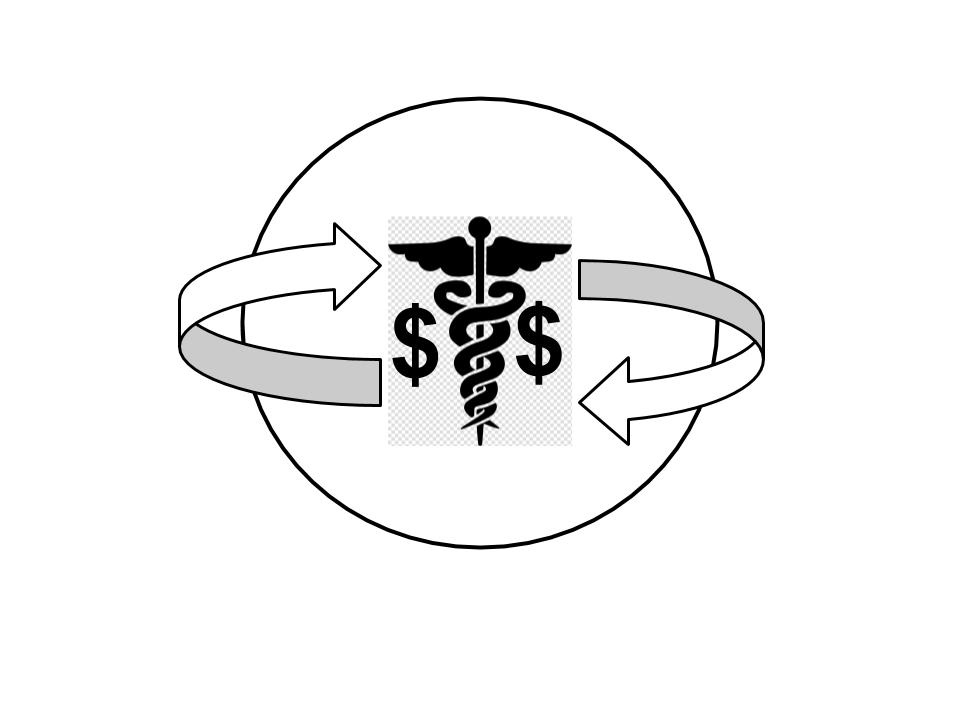
| CM "World Healthcare" (2019) |
Imagine a world where every single person has access to healthcare. This seems like an ideal world. There is so much money and wealth in the world yet not everyone has access to healthcare, even in the world’s richest countries. If we were to spread wealth more evenly, we would be able to provide quality healthcare for everyone. Certain countries are already doing it. Even America put in medicare for all plans in the past. What would we actually have to do to create equal healthcare for all? How could we spread money around so healthcare is equal? 21st-century economics aims to look at economics in a new light, what if we looked at the economics of healthcare in a new light? There are many new economic models that could be applied to healthcare like circular economics. If healthcare cost less, it could be accessible to more people. If we were able to reuse old equipment and reduce waste, we could greatly cut costs for basic services providing them to more people. If we step back and look at healthcare from an economic perspective instead of a scientific perspective, we could make great progress in global healthcare and health accessibility.
In the book Doughnut Economics by Kate Raworth, the idea of looking at economics from different perspectives is encouraged. Many global issues big and small can be looked at in an economic way. One of the biggest global issues is healthcare. According to Raworth “For over 70 years economics has been fixated on GDP, or national output, as its primary measure of progress. That fixation has been used to justify extreme inequalities of income and wealth coupled with unprecedented destruction of the living world. For the twenty-first century, a far bigger goal is needed: meeting the human rights of every person within the means of our life-giving planet.” Millions of people around the world have little or no access to healthcare. What would it take for everyone to have access to healthcare? According to the World Health Organization (WHO), about 3.5 billion people or half of the entire world does not have access to healthcare. They either have no place to get healthcare or are unable to afford the high prices for basic care. Some of the biggest discrepancies are in some of the wealthiest nations. In the United States, 44 million people either do not have access to healthcare, do not have insurance, or cannot afford healthcare. The Affordable Care Act passed by Barack Obama aimed to lessen the costs of healthcare in the United States by providing everyone basic insurance. Before the ACA, many insurance companies would turn down people with pre-existing conditions because they are more expensive. The ACA was lessened under the current administration. This has caused healthcare costs to increase greatly. A number of companies and non-profit organizations like Health Leads, a non-profit organization that works directly with hospitals to supply underserved people with basic healthcare needs. Creating these companies and organizations is hard. According to Garry Cooper, CEO of Rheaply: “A lot of people have ideas. It takes confidence to dive in and create something.” This is one of the reasons the healthcare crisis cannot be solved with just organizations. If we want to create a more equal health system in not just the United States, but in the world, we need to think about where we are putting our money. I believe we should create a system similar to the ACA and Universal Basic Income. I think we should give every person an amount of money to cover any health costs they may have. According to Andrew Yang, presidential candidate and founder of Universal Basic Income, there is enough money to give everyone some money. I think this, along with companies already working to lower the cost of healthcare, we can create a fair healthcare system for everyone.
Works Cited:
Amadeo, Kimberly. “What is Obamacare? The ACA and What You Need to Know.” The Balance.com. June 25, 2019. Web. November 14, 2019.
“Healthcare Crisis: Who’s At Risk? The Uninsured.” PBS.org. Public Broadcasting Service. Web. November 14, 2019.
Kelland, Kate. “Half of world’s people can’t get basic health services: WHO.” Reuters.com. December 13, 2017. Web. November 14, 2019.
Trahant, Grant. “15 Organizations Changing The World Through Healthcare.” Cause Artist.com. Web. November 14, 2019.
“What is the Freedom Dividend?” Yang 2020.com. Friends of Andrew Yang. Web. November 14, 2019.
Image:
“Health Symbol Vector - Clipart Library.” Clipart Library.com
In conclusion, this was a nice project. I really liked how much this project related to what we were doing in class this unit. I liked presenting my mini-lesson and reading the book. I am proud of what I came up with. I think I have some good ideas and I liked writing about something I am passionate about. In the future, I wish we had more time. While I was able to get this project done in a timely fashion, but I feel like if I had more time, I could have added more and made it better. I am still very happy with how this project came out. I really liked this class and look forward to the next.


