About Me

I am a student at GCE Lab School in Chicago. This is my blog to show all my work.

Pages

Showing posts with label Lab Report. Show all posts

Thursday, February 15, 2018

Multiple Sclerosis: A Personal Perspective

In the second STEAM class of my sophomore year, we are learning about the body. This class is called Disease, the first unit is called Body. In this unit, we learned mostly science. We learned about cancer and how that affects the body. We also learned about each organ system and the organs included in them and what they do. I am a total surgical junkie, so I already knew all of the material in this unit, I did break off a little bit and did some extra research for myself. We also learned a math concept called completing the square. This is another way to solve quadratic equations. I have done a lot of work in quadratics in the past, but I have never learned this technique. It was actually really easy to learn and same a lot of sense. We did not take any FEs this unit, but I hope for some cool ones in the following units. For this action project, we were asked to conduct an interview. It had to be anonymous but we had to find someone with a disease and interview them about it. We then had to write up their profile and classify their disease in accordance with what we learned in class. We also had to draw a picture of each of the body systems that the disease affects. I made the outline of a human body and then used transparencies to draw the affected organ systems. I interviewed a woman in her late 40s with Multiple Sclerosis. I really liked this project, I was able to talk about the things I love to learn about. I really didn't have any issues with this project and I look forward to the rest of this class and the next class.

For this action project, I thought about who I could interview. I have some family members and some friends who have or have had diseases. I decided to interview someone with Multiple Sclerosis.

Multiple Sclerosis

Multiple sclerosis or MS is an autoimmune disorder of the central nervous system or CNS. The CNS is the body’s control system. An autoimmune disease is when the body’s immune system attacks a healthy system or organ in the body. In the case of MS, the body’s immune system is attacking the myelin, which is the protective sheath on the nerve fibers, brain, and spinal cord. The myelin is damaged and interrupts the signals from the brain and the nerves, eventually leaving the nerves damaged. MS patients may have a wide variety of signs and symptoms depending on which nerves and how many nerves are affected. It could be a very small localized area or large areas. MS can have drastic effects on life. The loss of motor function or blindness are some extreme symptoms of MS. Some less severe cases can be managed with medication with little or no symptoms in day-to-day life. The most common type of MS disease course is a relapsing-remitting course. This means that symptoms of the disease come and go. Symptoms will appear over time and then get better. These periods of quiet time can last weeks to years. According to the Mayo Clinic, 60-70% or relapsing-remitting MS have steady progression and no relief time: this is called secondary progressive MS. There is also a course where people have a gradual onset and steady symptoms, this is called primary-progressive MS.

Symptoms

Symptoms of MS can vary from person to person. The most common type of symptoms a patient will experience are:
  • Numbness and weakness in limbs
  • Partial or total vision loss and pain when moving eyes
  • Double vision
  • Headaches
  • Tingling in extremities
  • Tremors
  • Fatigue
  • Dizziness
  • Slurred speech.
  • Problems with bladder and bowel function.
Classification

This disease is a genetic disease. MS is a non-transmittable disease. The cause of this disease is still unknown. The only way the disease is linked to other people is genetically. If you have a sibling or parent who had had MS, you are at higher risk of contracting the disease. MS is not transmitted through the air or bodily fluids. Some risk factors for contracting MS include:
  • Family history - people with an immediate family member that has or had MS you are more at risk.
  • Viruses - certain kinds of viruses have been connected with MS like the Epstein Barr virus that causes infectious mononucleosis. 
  • Autoimmune diseases - diseases such as Type 1 diabetes, Thyroid disease, or Inflammatory Bowel Disease. Smoking also causes a higher risk of contracting MS. 
  • Age - people between the ages of 15 and 60 are the most at risk for MS
  • Gender - women are twice as likely of getting MS than men.
MS is most common in areas with temperate climates such as the northern US, Canada, south-eastern Australia, New Zealand, and Europe. The most common racial group to contract MS is people of Northern European descent. People who are of African, Asian, or Native-American descent have the lowest risk of contracting MS. There is no geo-economical link to MS at this point.

Nobody really knows why people contract MS but there are some risk factors like I stated before. The person I decided to interview is a 48-year-old female named Lynn. She has 2 teenage daughters and a husband. Lynn was diagnosed with MS 8 years ago in 2010. Lynn is a woman which means she was already at a higher risk. She also is of Northern European descent which it the most at risk racial group. She also lives and is from the northern United States which is one of the most at risk geographical locations. Lynn’s grandmother always had an undiagnosed neurological condition that could have been MS. Lynn also had Mononucleosis when she was in high school. This disease is caused by a bacteria that might be related to MS.

Lynn

It was the summer of 2010 and Lynn was living her life normally. She one day started to notice something funny with her vision. “It was weird,” she said. “Because for a couple days, I had been like feeling like something was weird with my vision. It was just, I couldn’t quite put my finger on what was going on, but it was like when I would turn my head quickly, my eyes weren't tracking right. We went to a dance recital and I really realized I was seeing double.” These are both very common symptoms of MS. Lynn also had a strange tingling feeling on her thigh. “It was like I had had a Novocaine shot.” she described. “ I did mention it to my doctor, and she said (“Well, I’m sure you don’t have MS.”)” It turns out the doctor was wrong. Lynn also experienced numbness and tingling on her extremities, another very common symptom. She was finally diagnosed later in the summer.

Lynn was diagnosed by the results of a series of tests. She underwent several MRIs which stands for Magnetic Resonance Imaging. These scanned her brain to look for lesions. She also underwent a Lumbar Puncture or Spinal Tap. This is a minor surgical procedure in which a large spinal needle is inserted between 2 lumbar vertebrae into the spinal canal to collect a sample of cerebrospinal fluid, this is the fluid that is on the outside of the spinal cord. The fluid is tested to rule out other neurological diseases such as meningitis.

Lynn’s treatment consisted mostly of medication and follow up imaging. MS is an incurable disease. Symptoms can be managed and pain can be relieved, but the disease is always going to be in the body. She was prescribed Copaxone which is a medication that blocks the immune system from attacking the brain or an Immunosuppressant. This medication must be taken daily and is administered by an injection beneath the skin. Lynn could give herself these injections at home. She would take this injection every night, she would rotate between her thigh, buttock, stomach, and arm.She recalled, “It was scary the first time I had to do it because I didn't know how it was going to feel. I was relieved that it was not as bad as I thought. I found that I had injection site reactions. Early on I had pancake sized welts that were red and itchy.” The side effects of this medication are bruising and skin irritation at the injection site.

When she was first diagnosed, Lynn was admitted to the hospital for a little over a week in the summer of 2010. This was because the intravenous steroids they were giving her called Solu Medrol needs constant blood testing and can damage the liver. “It was mostly annoying because I actually felt fine and didn’t feel like there was a reason I needed to be in the hospital. I was mostly worried about my kids because they were only 8 and 5.”

Today, Lynn lives life much like anyone else would. She has to take her Gilenya pill every night. She now takes this pill instead of the injection. Lynn’s symptoms are managed by the medication and she has no side effects in her day-to-day life. Lynn still has to go to frequent doctor’s appointments for MRI’s neuro exams and blood testing. These are all precautions to make sure she is prepared and aware if she has a relapse.


CM "Nervous System" (2018)

MS affects a few systems of the body. The main one is the Nervous system. The nervous system is bodies control system. The brain makes all of our decisions and our nerves make us move and feel pain. Our sensory organs pick up on external senses and turn that into information to our brain. The lymphatic system attacks the coating on the nerves and causes damage and can eventually destroy them. The coating on the nerves Myelin also coats the brain and spinal cord. This is the coating that deteriorates and leaves the nerves damaged.

CM. "Lymphatic System." (2018)

The Lymphatic System is the body’s defense system. It protects us from diseases. The Lymph nodes produce the chemical lymph that fight diseases. Sometimes the immune system attacks healthy parts of our bodies. This is called an Autoimmune disease. In a person with MS, the immune system attacks the healthy coating on the nerve fibers causing them to become damaged.

CM. "Digestive System." (2018)

The Digestive System is the body’s processing system. Food goes in and is processed and the waste comes out. The intestines absorb nutrients from the food and add water. They then empty the waste out the anus. In patients with MS, one symptom might be problems with bowel control. This means patents might have a hard time controlling when they defecate..

CM. "Renal System." (2018)

The Renal or Urinary System is the body’s liquid waste system. The kidneys filter the blood and absorb the nutrients. The waste from the filtered blood then goes down the Ureters into the Bladder, which is a holding place for the liquid waste. When the body has to urinate, the liquid is released into the urethra where it exits the body. Some patients with MS might have trouble with bladder function. This means patients may have a hard time controlling when they can urinate.

In conclusion, I really liked this project and didn't really have any trouble with it. The only problem was that I included too much information. I was over 400 words over the limit. I had to take out a lot of information that I thought was valuable, so I didn't like that much. Other than that, everything went smoothly and I am proud of how it came out.

Works Cited:

“Diagnosis.” (2017) Mayo Clinic. Mayo Foundation for Medical Education and Research. Web. 15, Feb, 2018.
https://www.mayoclinic.org/diseases-conditions/multiple-sclerosis/diagnosis-treatment/drc-20350274

Moody, C. (2018, February 11) Personal Interview.

“Multiple Sclerosis.” (2017) Mayo Clinic. Mayo Foundation for Medical Education and Research. Web. 9, Feb, 2018.
https://www.mayoclinic.org/diseases-conditions/multiple-sclerosis/symptoms-causes/syc-20350269

“What Causes MS?” (2018) National MS Society.org. National Multiple Sclerosis Society. Web. 9, Feb, 2018.
https://www.nationalmssociety.org/What-is-MS/What-Causes-MS

Sunday, October 15, 2017

Can Gibbons Take the Heat?


For our second unit of our fall term class called Population, we took a long time in the unit. We decided to take a long time and dive deep into our investigation of unit 2. We learned about standard deviation, permutations and combinations, statistics, box and whisker plots, DNA and genes, and evolution. For our FE, we went to the Field Museum. We went to the evolution and dinosaur exhibit, as well as the animals. We tried to find our own animals in the displays. I was successful in finding the white-cheeked gibbons. I enjoyed this unit. I wasn’t the biggest fan of all the math but I liked the things we learned in this unit. For this action project, we were asked to use our animal that we used from AP1 and see what would happen if we put it in a different environment. I continued with the white-cheeked gibbon. We found at least 10 representatives of our animals in photo form, and chose which 3 we thought would survive in our environment. We also found the data in our samples, as well as investigating their relatives and ancestors.

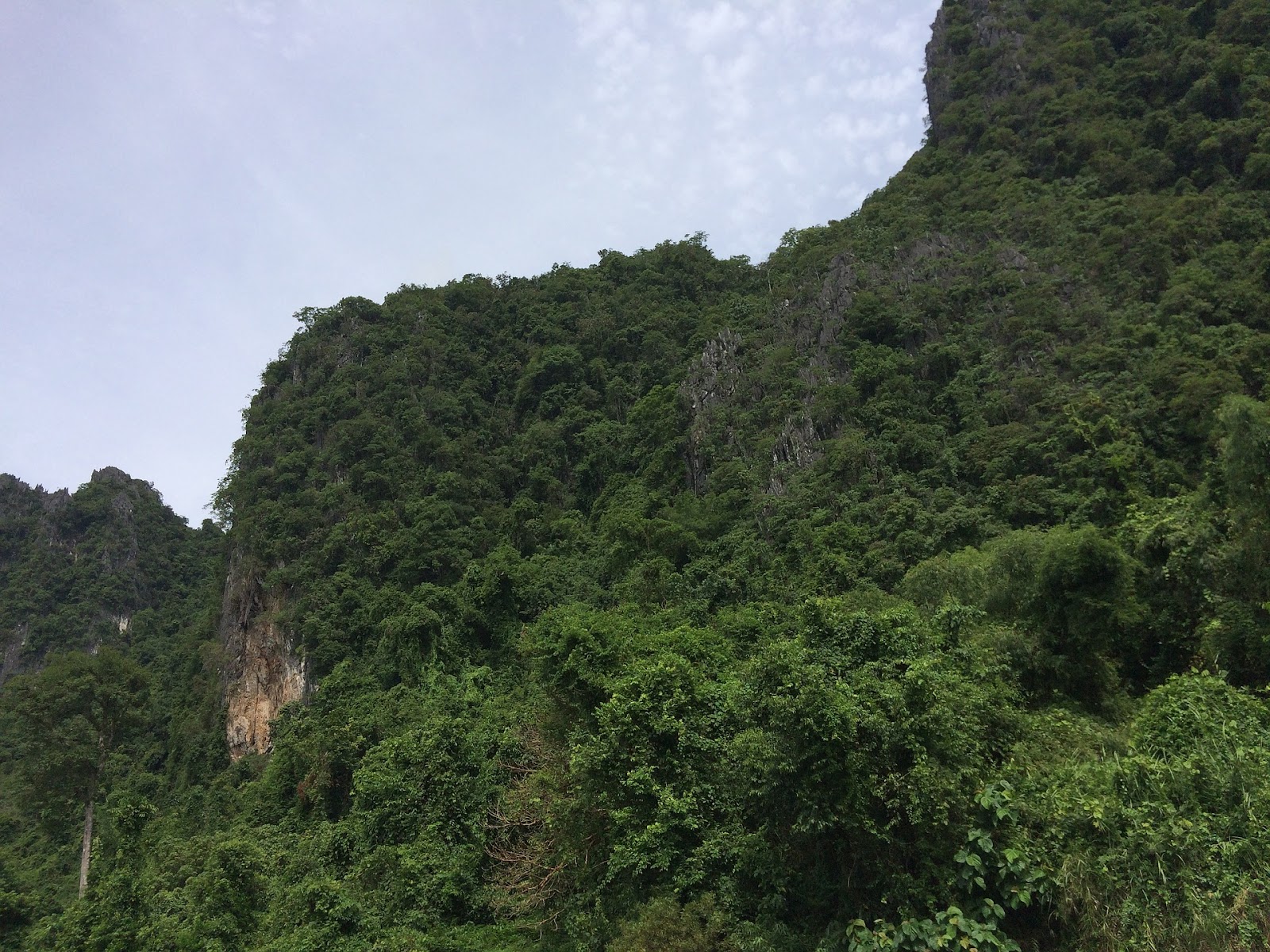
clazic. Laos Rainforest. 2015. Photograph. Vang Veing, Laos. Pixabay. 10, Oct 2017. Web
White-cheeked gibbons or Nomascus leucogenys live in the tropical rain forests of southeast Asia. The countries they usually habitat include Vietnam, Laos, and southern China. This is only a small part of the southeast Asian rain forest. The rain forest is the oldest in the world and ranges 1,112,000 square miles. The temperature usually ranges from 70 to 90 degrees with very high humidity. The rainy season usually takes place between October and February. These rain forests get about 79 inches of rain annually. The plants and animals that inhabit these rain forests are adapted to deal with the hot humid conditions, as well as months of sometimes constant rain.

In my scenario, the temperatures increase 4 degrees annually. This could mean a lot of things for the land. The rainy season may shorten and droughts may occur. This means the trees that the gibbons live in and eat from my die. This also means the hot humid seasons will be longer and hotter. This may be too hot for the gibbons who have hair and can tolerate some heat, but may not be able to tolerate the rising temperatures.


I think there are downfalls and opportunities for the gibbons in this scenario. The gibbons could possibly survive in this environment. Gibbons are made to withstand the hot humid climate of southeast Asia. This will be a more gradual change as the temperature is rising over the course of years. Some gibbons might starve because of drought caused by an increase in temperatures. Some gibbons might migrate to new lands and thrive and re-populate.

These are some traits that white-cheeked gibbons possess that allow them to live in their habitat
  • Brachiation-This is a feature that many primates have that allows them to swing in trees.
  • Herbivore-The Gibbons only eat fruits leaves and seeds.
  • The weight-Their light weight allows them to live in trees and swing from all sorts of branches.
  • Families.- Gibbons family structure allows them to live only with their families.

These are some immediate effects that the change would have on the population.
  • Animals with fur could overheat more easily 
  • Plants that animals rely on for food will die because of the heat 
  • The rainy season will shorten and plants will die from lack of water. 
Imagine we had a population of white-cheeked

Derek
Add cPoplin, Ryan E. White-cheeked Gibbon. 2007. Photograph. Wikimedia Commons. 10, Oct 2017. Web.


Deb
Add capSpangenberg, F. Southern white-cheeked gibbon. 2007. Photograph. Wikimedia Commons. 10, Oct 2017. Web.


Sam

Smith, Roger. White-cheeked gibbon (male) 2010. Photograph. Adelaide Zoological Gardens. South Australia. Flickr. 10, Oct 2017. Web.


Christina (center)
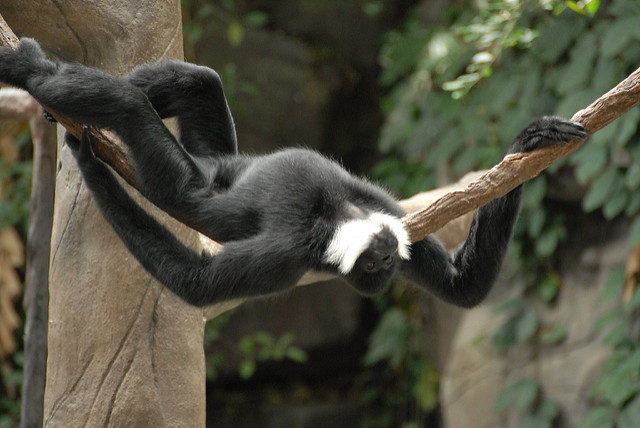
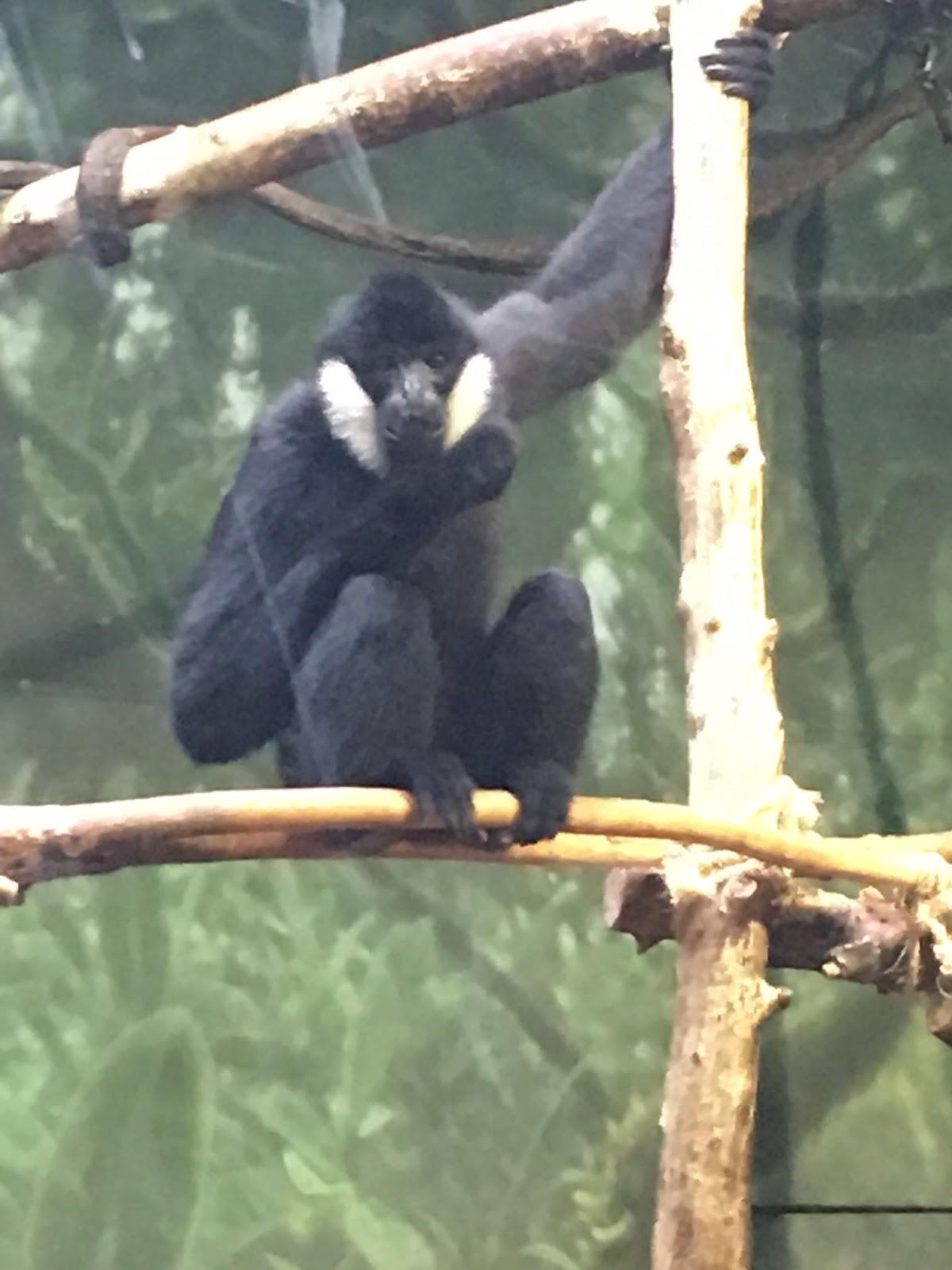
Kilby, Eric. Gibbon Family Portrait. 2017. Photograph. Stone Zoo. Stoneham Massachusetts. Flickr. 10, Oct 2017. Web.


Phillip

cuatrok77. WHITE CHEEKED GIBBON. 2014. Photograph. Monroe, Florida. Flcikr. 10, Oct 2017. Web.


Maggie

Mamoritai. White-Cheeked Gibbon (Female). 2009. Photograph. The Bronx Zoo. New York, New York. Flickr. 10, Oct 2017. Web.


Paul
Voight, Garret. White-Cheeked Gibbon. 2014. Photograph. Minnesota Zoo. Apple Valley Minnesota. Flickr. 10, Oct 2017. Web.


Stephen
Karen. White Cheeked Gibbon. 2008. Photograph. San Antonio Zoo. San Antonio Texas. Flcikr. 10, Oct 2017. Web.


Paula

Smith, Roger. Mother and daughter. 2012. Photograph. Adelaide Zoo. South Australia. Flickr. 10, Oct 2017. Web.


Owen


Trumbo, Anthony. White-cheeked Gibbon again 1. 2008. Photograph. Nashville Zoo. Nashville, Tennessee. Flickr. 10, Oct 2017. Web.


Richard

More, Josh. White-cheeked Gibbon (Nomascus leucogenys.) 2007. Photograph. Minnesota Zoo. Apple Valley. Minnesota. Flickr. 10, Oct 2017. Web.


Pablo

More, Josh. White-cheeked Gibbon (Nomascus leucogenys)_5. 2015. Photograph. Minnesota Zoo. Apple Valley Minnesota. Flickr. 10, Oct 2017. Web.


Here are my calculations of central tendencies. Central tendencies show all the numbers of the data set. Here, I am listing white-cheeked gibbon weight. White-cheeked gibbons usually weigh 15-20 pounds and are some of the smallest apes. the following number represents the weight of each gibbon in my sample.

a.) 15
b.) 17
c.) 19
d.) 21
e.) 20
f.) 22
g.) 19
h.) 16
i.) 21
j.) 18
k.) 17
l.) 21

Maximum - 22

Minimum - 15

Range - 22-15 = 7

Mode - Most occurring number - 21

Mean - 15 + 17 + 19 + 21 + 20 + 22 + 19 + 16 + 21 + 18 +17 +21 = 226 / 12 = 18.83

Median - 15, 16, 17, 17, 18 , 19, 19, 20, 21, 21, 21, 22 = 19, 19 Average = 19 + 19 / 2 = 19
                 x    x    x    x    x                 x    x    x    x    x

1QR - Median of the first half = 15, 16, 17,17, 18, 19 1QR = 17

3QR - Median of the second half = 19, 20, 21,l21, 21, 22 3QR = 21

IQR = Range of the 1QR and 3QR = 21 - 17 = 4

Box and Whisker Plot


CM. Box and Whisker Plot. (2017)


CM. Standard Deviation.(2017)


CM. Calculations.(2017)

Standard deviation is a tool used in statistics to show the variation in a set of data values.


The next equation shows how many possible ways I could have chosen my 3 gibbons.These equations are called permutations and combinations. A permutation is when the order of the choosing matters. A combination is when the order of the choices does not matter. The way I groupes the surviving gibbons is called a combination. It is a combination because I chose 3 random gibbons that I thought would survive. I didn't put them in order, otherwise, that would be a permutation.


CM. Combinations & Permutations. (2017)
Northern white-cheeked gibbons (Nomascus leucogenys) are in the family of primates. The first primates were believed to have developed in North America around 55 million years ago. They formed into what would look like lemurs today. Apes evolved around 25 million years ago. Apes are smarter than monkeys and have bigger brains. Both monkey and some apes can use brachiation, which ables them to swing through trees. Lesser apes evolved out of apes. Hylobatidae is the technical name. This belongs to gibbons, which are all parts of Hylobatidae. Gibbons are different from apes because they have low sexual dimorphism. This means that males and females are closer in size. They also have longer arms for swinging in trees.

Living Relative: Siamang Gibbon


suneko. Symphalangus syndactylus, Chiba Zoo, Japan. 2007. Photograph. Chiba Zoo. Japan. Wikimedia Commons. 11, Oct 2017. Web.

CM. Siamang Gibbon Comparison. (2017)

Extinct Relative: Gigantopithecus

Kaekart. Gigantopithecus. 2016. Drawing. Wikimedia Commons. 11, Oct 2017. Web.


CM. Gigantopithecus Comparison. (2017)
In conclusion, I think the gibbons will survive. They may evolve to be smaller with less fur and may have a wider variety of diet possibly including small animals. Even if the gibbon's trees do die from a drought, they can still migrate to other areas that are less affected by the temperature change, and they will repopulate there.

I really enjoyed this project. I liked how it covered all the topics and different steps of our unit. I found this project somewhat challenging. It was difficult to format the whole blog post, and it was also difficult to make sure that all of the equations were right and looked clear for the reader. I am proud of how this project turned out. I really like this class and I look forward to the rest of the classes of sophomore year!

Works Cited:

"Gigantopithecus" Prehistoric Wildlife.com. n.p. n.d. Web. 16, Oct 2017.
http://www.prehistoric-wildlife.com/species/g/gigantopithecus.html

Platt, John R. "Sunday Species Snapshot: White-Cheeked Gibbons." Scientific American.com. Scientific American. 3, Nov 2013. Web. 16, Oct 2017.
https://blogs.scientificamerican.com/extinction-countdown/sunday-species-snapshot-white-cheeked-gibbon/

"Siamang (Symphalangus syndactylus)" Arkive.org. Widescreen. 2017. Web. 16, Oct 2017.
http://www.arkive.org/siamang/symphalangus-syndactylus/

"Siamang" Smithsonian National Zoo.edu. Smithsonian. n.d. Web. 16, Oct 2017.
https://nationalzoo.si.edu/animals/siamang

"Southeast Asian Rainforest." Blue Planet Biomes. n.p. n.d. Web. 16, Oct 2017.
http://www.blueplanetbiomes.org/se_asian_rnfrst.htm

"The Evolution of Primates" Lumen Learning.com. n.p. n.d. Web. 16, Oct 2017.
https://courses.lumenlearning.com/biology2xmaster/chapter/the-evolution-of-primates/

"White-cheeked gibbon." Smithsonian National Zoo.edu. Smithsonian. n.d. Web. 16, Oct 2017.
  https://nationalzoo.si.edu/animals/white-cheeked-gibbon


Tuesday, September 19, 2017

Trust Me, It's not a Monkey

For my first Sophomore STEAM class, Population, we learned all about animals and different sets and subsets which is a mathematical representation of a group of numbers. We read the book “In the Shadow of Man” by Jane Goodall. I really liked this book and thought it was very interesting to learn about how chimpanzees play and interact with each other and humans. For this project, we were asked to pick an animal of our choosing. I chose a white-cheeked gibbon because I love primates, and I have a gibbon friend at the Lincoln Park Zoo. We went to the zoo on an FE. We started off by observing the chimps and then we broke off to observe our own animals. I saw my gibbon friend Caruso and observed him swinging around as well as his mate and offspring. At the end, they all snuggled up together and slept. I really enjoyed this project because I love animals and the science of them.

IMG_1201.JPG

CM “Caruso” (2017)
This is my white-cheeked gibbon friend Caruso.

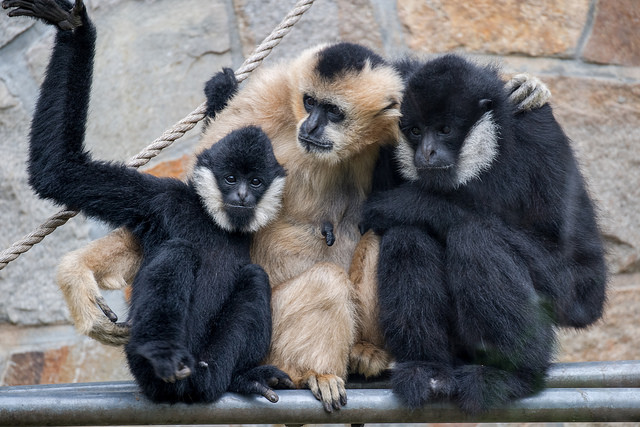
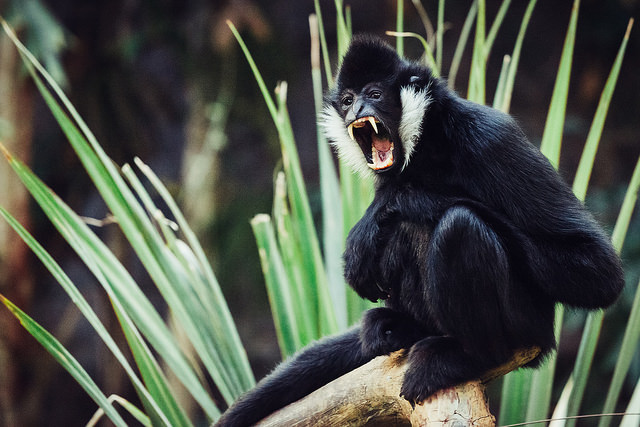
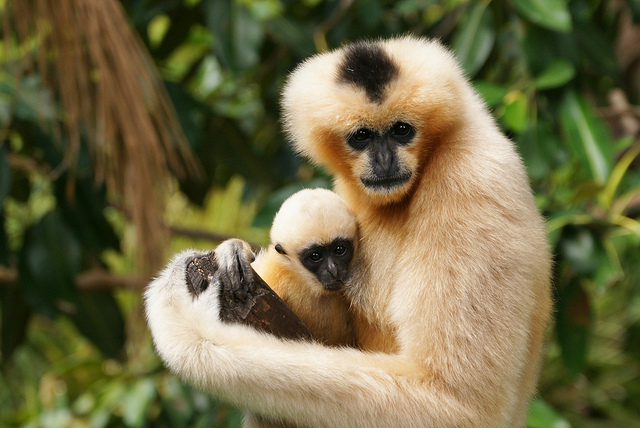
The white-cheeked gibbon or Nomascus leucogenys is one of the smallest apes. They are not monkeys, even though they do swing and hang from trees. They do not have a tail, which means they are apes. White-cheeked gibbons live in the high canopies of trees in the south-eastern Asian rainforest in countries such as Vietnam, Laos, southeastern China, and eastern Cambodia. White-cheeked gibbons are critically endangered in the wild. They typically spend their days in the tree-tops in their home range. They live in small family groups with an adult pair and their young offspring. Common behavior includes adults grooming and young playing. White-cheeked gibbons mostly eat ripe fruits and leaves. They usually feed in the upper and middle parts of the canopy.


Scientists use the taxonomic system to order animals.This helps scientists organize animals by the broadest terms, to the species. The order is:
Kingdom
Phylum
Class
Order
Family
Genus
Species


The taxonomic order of a White-Cheeked Gibbon is:


Taxonomic Level
Classification of white-cheeked gibbon
Description of classification
Kingdom
Animalia
Multicellular, Heterotrophic
Phylum
Chordata
Spinal cord
Class
Mammalia
Hair, Live birth, Produces milk
Order
Primates
Have 5 digits, Opposable thumbs, Lives in trees
Family
Hylobatidae
Long curved digits on hands and feet, Long, strong arms, Move mostly by two armed brachiation.
Genus
Nomascus
18-25 inches tall, 15-20 pounds.
Species
Leucogenys
All black except for cheeks, Females blonde, Babies born blonde and turn black while males stay black and females turn blonde again at sexual maturity. (5-7 years old)

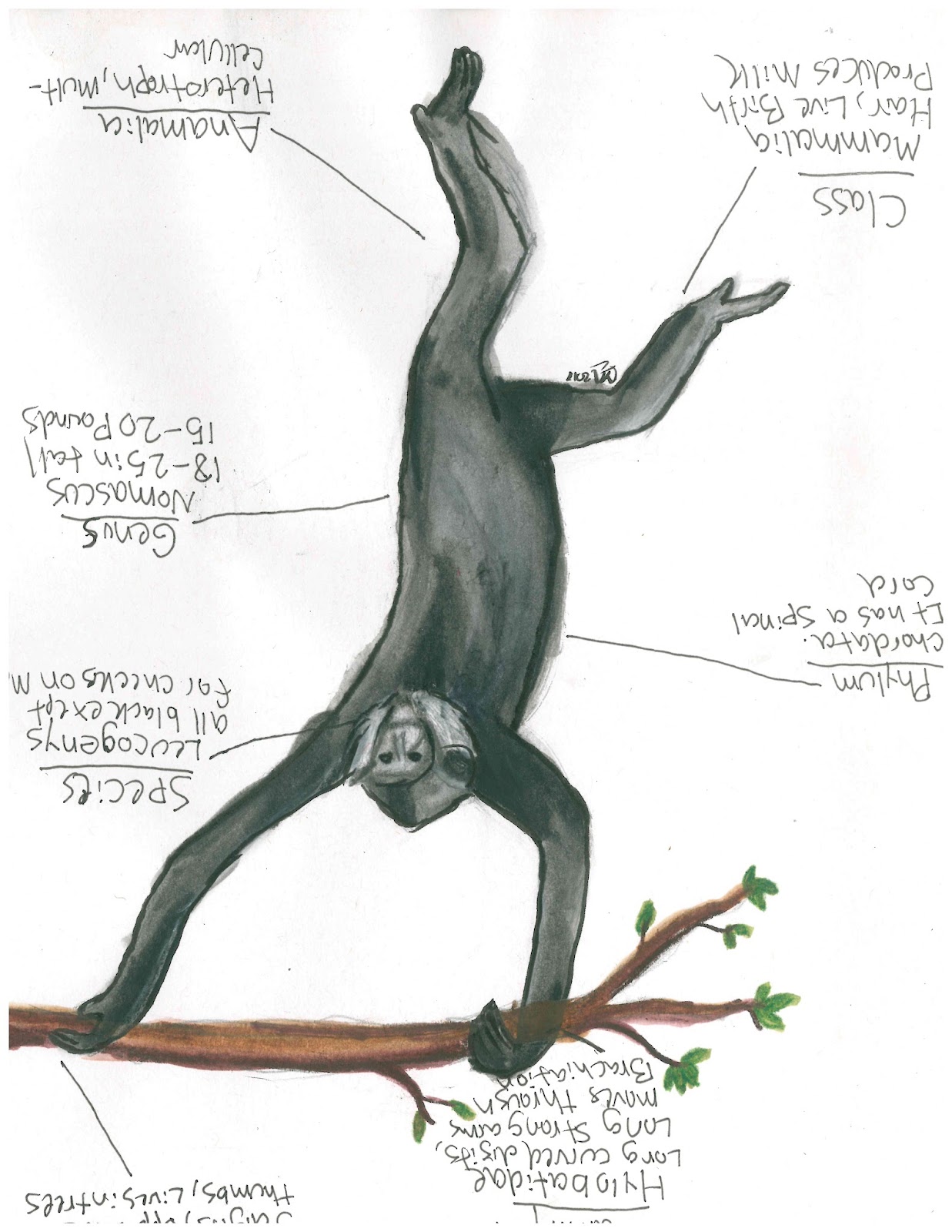
This is the art piece I made of the White-Cheeked Gibbon:


doc07102220170920131217_001.jpg
 CM “White-Cheeked Gibbon" (2017)


This is my reference picture:

7629185118_0806bfbb99_m.jpg
Greg Goebel, “Ybgib_3b” Flickr, Web, 2008, 19 Sep. 2017

doc07103120170920152221_001.jpg
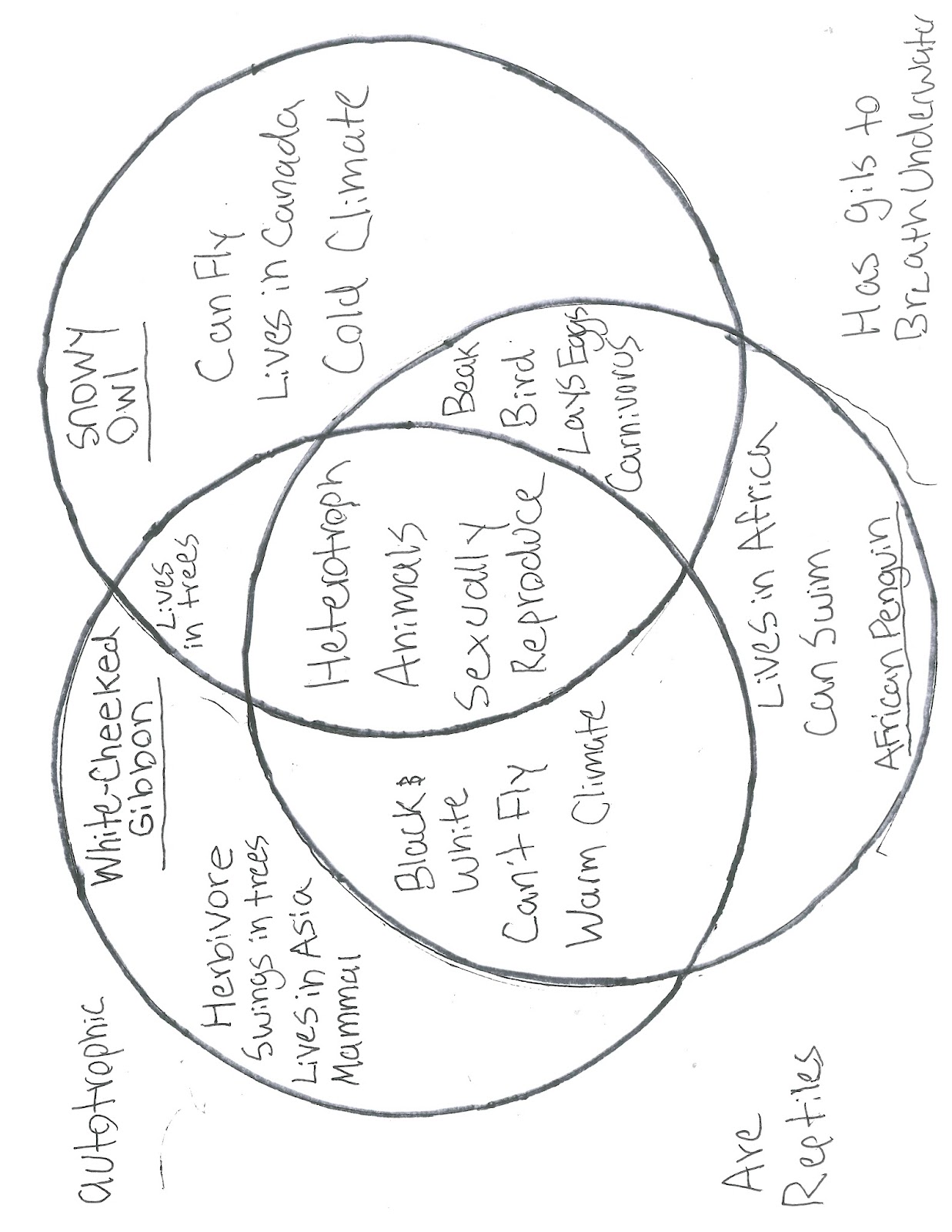
CM “Triple Venn-Diagram” (2017)
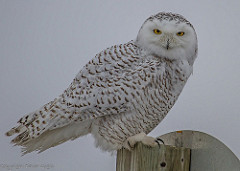
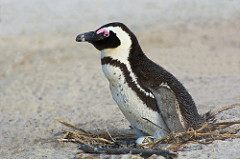
I compared my white-cheeked gibbon with two other animals researched by my classmates. JMP researched the African penguin or Spheniscus demersus and OL researched the snowy owl or Bubo scandiacus.  You can view their blogs about their animals here for JMP and here for OL. I had never really thought about the comparisons between these three animals. White-cheeked gibbons are primates, apes, herbivores, live in trees, and live in southeast Asia. Snowy owls are birds, live in Canada, eat small mammals, and have strong beaks. African penguins are birds, live in Africa, eat fish, are black and white, can swim, and can’t fly. I thought it was interesting comparing these animals. They have a lot more in common than you may think. I made a triple Venn-Diagram to show the comparison between the three.

14366349017_6459f55a46_m.jpg
e140100, “White-cheeked gibbon.” Flickr, Web, 2014, 20 Sep. 2017. 

Dgrgic, “Snowy Owl.” Flickr, Web, 2015, 20 Sep. 2017

Insu Nuzzi, “African Penguin Sitting on Eggs.” Flickr, Web, 2014, 20 Sep. 2017


Below are some mathematical statements describing white-cheeked gibbons.

White-cheeked gibbon = G Primates = P Monkeys = M Carnivorous = C African = A

G 𝞊 {P}

Gibbons are an element in the set of primates.

g ∉ C

White-cheeked gibbon is not a set of carnivores.

g ⋂ M = Ө

The intersection of white-cheeked gibbons and monkeys is an empty set.

G U M = {All monkeys + white-cheeked gibbons}

The union of white-cheeked gibbons and monkeys are white-cheeked gibbons and all monkeys.

g 𝞊 P ⋂ A'

The intersection of primates and not African contains white-cheeked gibbons.


I really enjoyed this project. I love animals and I love researching them. I especially love drawing animals and identifying their traits. I thought I did well on this project. I was a little behind at first but I caught up. The most challenging part for me was not the actual work, but the formatting and getting it onto my blog. I spent a while just trying to get everything in place. I am really enjoying this class and I look forward to doing two more projects similar to this.

Citations

“Family Hylobatidae.” Family Hylobatidae, csmbio.csm.jmu.edu/biology/wunderre/primate_primer/family_hylobatidae.htm.

“Nomascus Leucogenys .” Nomascus Leucogenys (Northern White-Cheeked Gibbon, White-Cheeked Gibbon), Red List, 2017, www.iucnredlist.org/details/39895/0.

Orzech, Kathyrn. “Investigation.” Primate Features, University of Arizona, 2005, tolweb.org/treehouses/?treehouse_id=3029.

“White-Cheeked Gibbon.” Smithsonian's National Zoo, Smithsonian, 4 May 2017, nationalzoo.si.edu/animals/white-cheeked-gibbon.

“White-Cheeked Gibbon.” White-Cheeked Gibbon | Lincoln Park Zoo, Associations of Zoos & Aquariums, www.lpzoo.org/animal/white-cheeked-gibbon

Friday, May 12, 2017

Yeasty Beasties

For our second action project for our Food class, we were asked to bake bread. In the class, we were on our unit "cooking" so we learned all about leavening agents and baking science. For our Field Experience, my Grandma who has been a cooking instructor for the last 40 years, came into our class to do a baking demonstration and help us make different kinds of baked goods. We learned how leavening agents work and how unleavened bread tastes and feels. For this action project, we were asked to bake bread in 3 different groups and analyze the results. We baked loaves of bread with different kinds of leavening agents, they were: yeast, baking soda, and sourdough starter. My group was the yeast group. I really liked this project, I thought that it was very interesting and I really liked the hands-on aspect of this project. I thought the most challenging aspect was analyzing everything. There were a lot of steps, but I am very proud of how the bread came out.


Friday, December 9, 2016

Need a Game Recommendation?

In the class Game Changers,we learned all about tabletop games and game testing and design. I learned a lot about this topic. I knew nothing about games or game design when I walked into the class, but I now know all about games, game design, play testing, along with the math skills and art practice for designing out games. For our first Action Project, we were asked to make up a scenario in which a school or a local community service is in need of some games. We then had to make two game recommendations for their situation. To explain the game for them, we created game profiles for each game. The purpose of this assignment was to get us thinking critically about different games and to deeply analyze games that we thought would fit the scenario. I learned a lot about the games I researched a lot about the games as I don’t remember much about them even though they are really simple. and I thought that thinking up scenarios was pretty challenging. I overcame this challenge by brainstorming throughout a long period of time to let my thoughts sit. I am most proud of my original idea and my game recommendations.

Scenario: A pediatrician's Office is looking to purchase a game for their waiting room that kids can play with while they wait for their appointments. Requirements: They need a game that can:
  • Be played quickly or repeated multiple times
  • Can be played by a small number of people, approximately 1-4 players
  • Can’t be too complex because kids might be nervous or distracted but 
  • should take their mind off of their worries by being active.
  • Should be appropriate for ages 3 - 6
  • Needs to be durable.
  • Any pieces should be easily replaceable or don’t ruin the game if they get lost.
  • The games should be intuitive or quick to learn because they may not have much time waiting.

What I thought of:
  • Ringo Flamingo
  • Gone Fishin’
  • Hungry Hungry Hippos *
  • Hi Ho Cherry O
  • Loopin Louie
  • Rock Em Sock Em Robots
  • Alfredo’s Food Fight
  • Memory
  • Don’t Break the Ice
  • Operation
  • Crocodile Dentist *
  • Elefun
I had a lot of fun thinking up of these games as these were some of my favorite games from when I was a little kid. Out of all these games I thought the best games for the scenario were: Hungry, Hungry Hippos and Crocodile Dentist.

To show the pediatrician the games in detail, I typed up a game stat sheet for each of the games.

Crocodile Dentist

Hungry, Hungry Hippos

There are also strengths and weaknesses to each game Here is a comparison of the two:

Hungry, Hungry Hippos
  • Can lose marbles
  • Possible choking hazard
  • More competitive/More complex and strategic
Crocodile Dentist
  • May be scary for young children
  • Suspenseful and fun
  • No parts to lose or choke on\
Both

        + Active
        + Quick to learn, no complicated rules
        + Can play by yourself if needed
        + Durable
        + No batteries required
        + Quick to play one round
        + Can be played by a wide range of age
        - Isn’t entertaining for a long time

If I had to choose just one I would choose Crocodile Dentist because of its simplicity and fun. The fact that it doesn’t have any parts to get lost or any choking hazard makes it better suited to a pediatrician’s office.

James Shin (2011) roller coasters
        Web: Flickr


Marine Biodiversity Literature Review

It's officially my last action project at GCE! I've done over 80 action projects and here is my last. This project is for my last Se...