About Me

I am a student at GCE Lab School in Chicago. This is my blog to show all my work.

Pages

Tuesday, September 19, 2017

Trust Me, It's not a Monkey

For my first Sophomore STEAM class, Population, we learned all about animals and different sets and subsets which is a mathematical representation of a group of numbers. We read the book “In the Shadow of Man” by Jane Goodall. I really liked this book and thought it was very interesting to learn about how chimpanzees play and interact with each other and humans. For this project, we were asked to pick an animal of our choosing. I chose a white-cheeked gibbon because I love primates, and I have a gibbon friend at the Lincoln Park Zoo. We went to the zoo on an FE. We started off by observing the chimps and then we broke off to observe our own animals. I saw my gibbon friend Caruso and observed him swinging around as well as his mate and offspring. At the end, they all snuggled up together and slept. I really enjoyed this project because I love animals and the science of them.
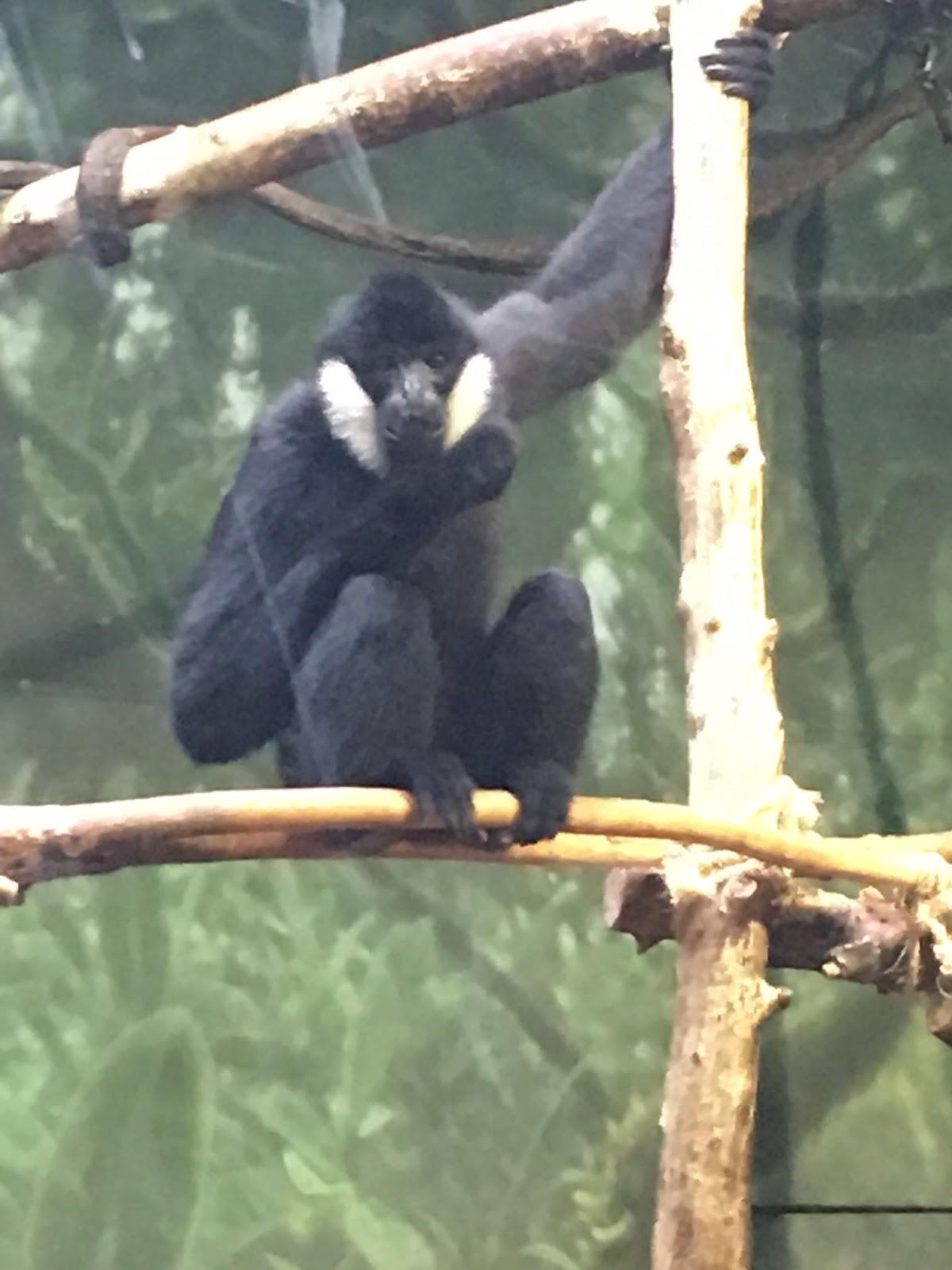
IMG_1201.JPG

CM “Caruso” (2017)
This is my white-cheeked gibbon friend Caruso.

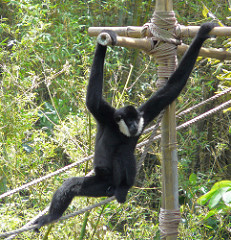
The white-cheeked gibbon or Nomascus leucogenys is one of the smallest apes. They are not monkeys, even though they do swing and hang from trees. They do not have a tail, which means they are apes. White-cheeked gibbons live in the high canopies of trees in the south-eastern Asian rainforest in countries such as Vietnam, Laos, southeastern China, and eastern Cambodia. White-cheeked gibbons are critically endangered in the wild. They typically spend their days in the tree-tops in their home range. They live in small family groups with an adult pair and their young offspring. Common behavior includes adults grooming and young playing. White-cheeked gibbons mostly eat ripe fruits and leaves. They usually feed in the upper and middle parts of the canopy.


Scientists use the taxonomic system to order animals.This helps scientists organize animals by the broadest terms, to the species. The order is:
Kingdom
Phylum
Class
Order
Family
Genus
Species


The taxonomic order of a White-Cheeked Gibbon is:


Taxonomic Level
Classification of white-cheeked gibbon
Description of classification
Kingdom
Animalia
Multicellular, Heterotrophic
Phylum
Chordata
Spinal cord
Class
Mammalia
Hair, Live birth, Produces milk
Order
Primates
Have 5 digits, Opposable thumbs, Lives in trees
Family
Hylobatidae
Long curved digits on hands and feet, Long, strong arms, Move mostly by two armed brachiation.
Genus
Nomascus
18-25 inches tall, 15-20 pounds.
Species
Leucogenys
All black except for cheeks, Females blonde, Babies born blonde and turn black while males stay black and females turn blonde again at sexual maturity. (5-7 years old)

This is the art piece I made of the White-Cheeked Gibbon:
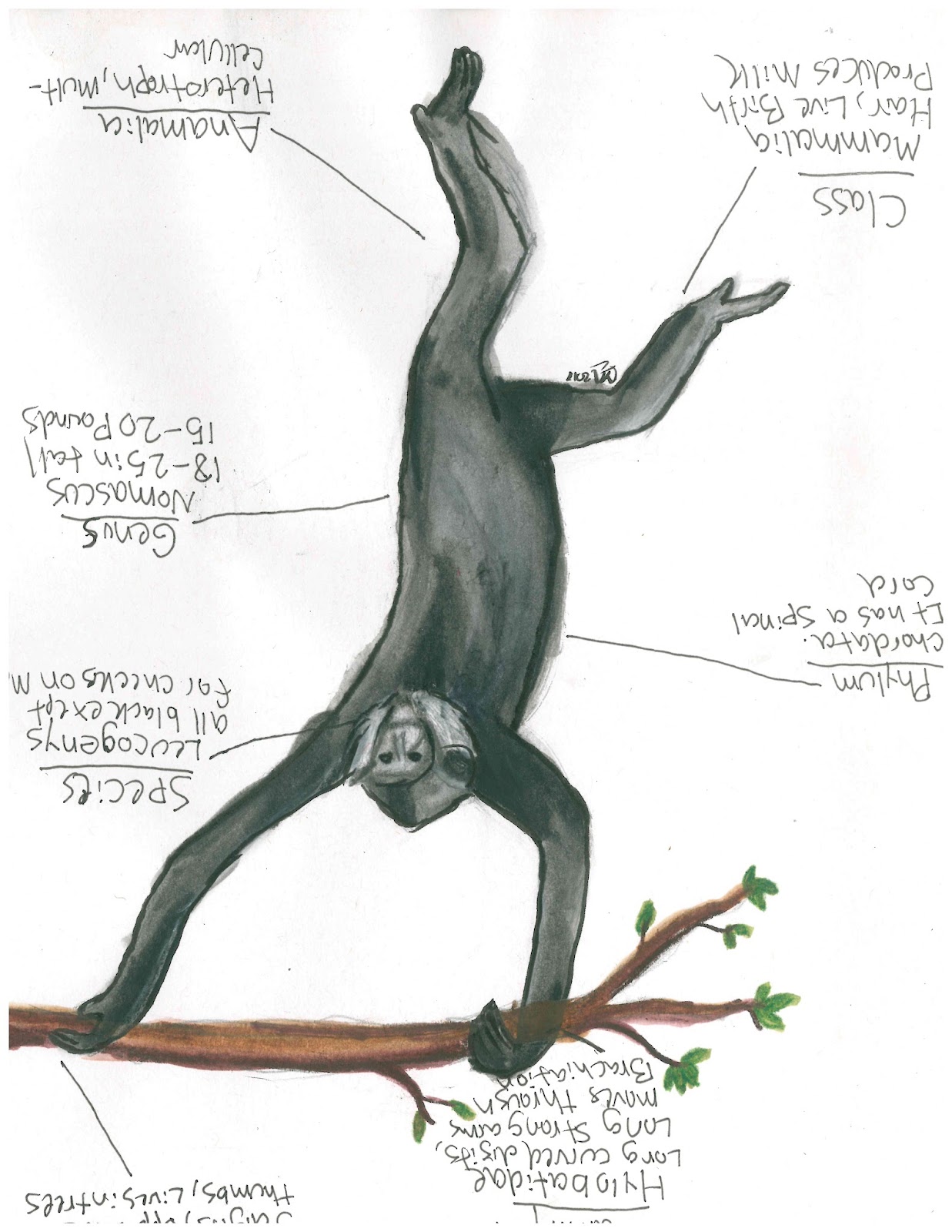


doc07102220170920131217_001.jpg
 CM “White-Cheeked Gibbon" (2017)


This is my reference picture:

7629185118_0806bfbb99_m.jpg
Greg Goebel, “Ybgib_3b” Flickr, Web, 2008, 19 Sep. 2017

doc07103120170920152221_001.jpg
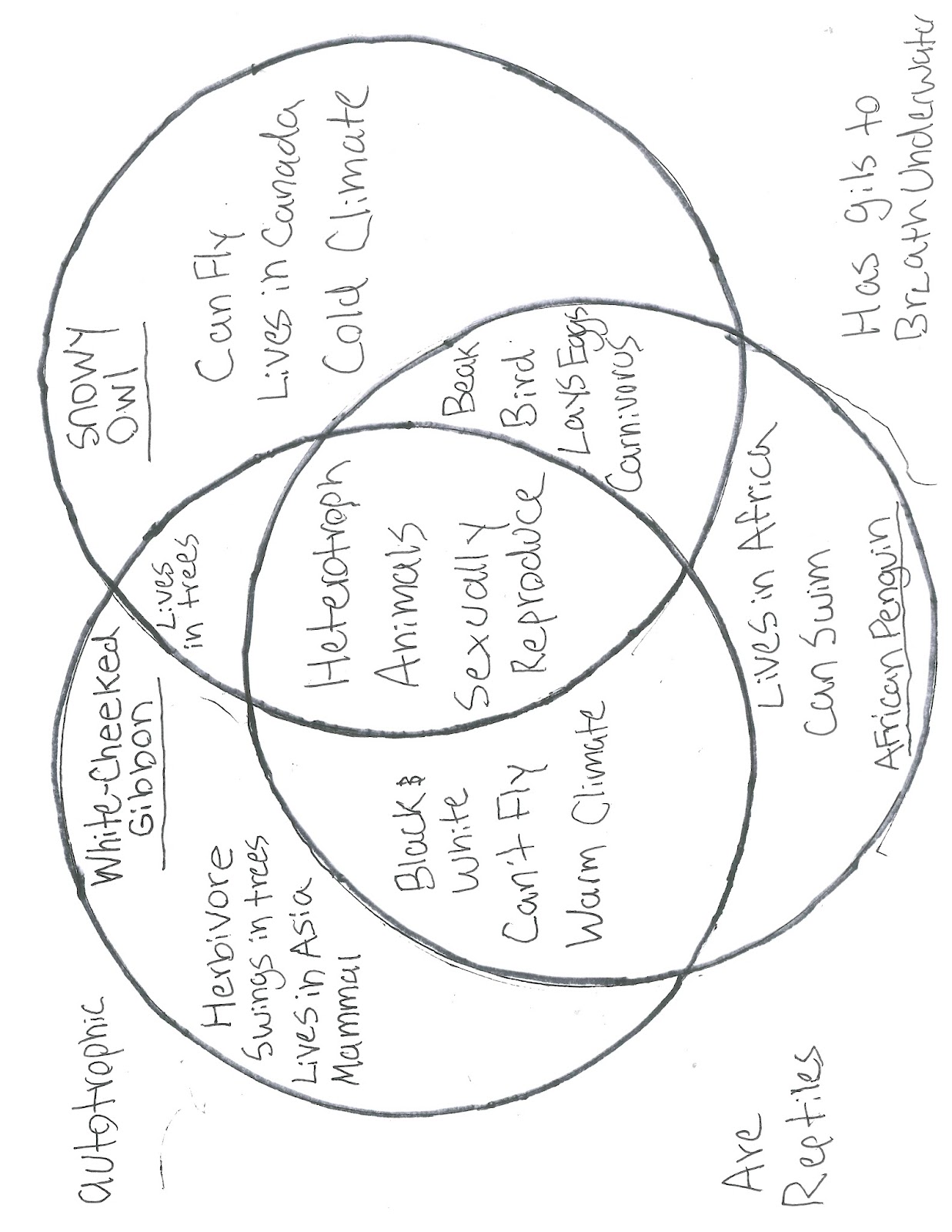
CM “Triple Venn-Diagram” (2017)
I compared my white-cheeked gibbon with two other animals researched by my classmates. JMP researched the African penguin or Spheniscus demersus and OL researched the snowy owl or Bubo scandiacus.  You can view their blogs about their animals here for JMP and here for OL. I had never really thought about the comparisons between these three animals. White-cheeked gibbons are primates, apes, herbivores, live in trees, and live in southeast Asia. Snowy owls are birds, live in Canada, eat small mammals, and have strong beaks. African penguins are birds, live in Africa, eat fish, are black and white, can swim, and can’t fly. I thought it was interesting comparing these animals. They have a lot more in common than you may think. I made a triple Venn-Diagram to show the comparison between the three.

14366349017_6459f55a46_m.jpg
e140100, “White-cheeked gibbon.” Flickr, Web, 2014, 20 Sep. 2017. 
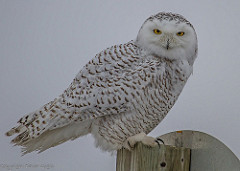
Dgrgic, “Snowy Owl.” Flickr, Web, 2015, 20 Sep. 2017
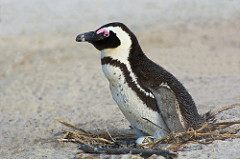
Insu Nuzzi, “African Penguin Sitting on Eggs.” Flickr, Web, 2014, 20 Sep. 2017


Below are some mathematical statements describing white-cheeked gibbons.

White-cheeked gibbon = G Primates = P Monkeys = M Carnivorous = C African = A

G 𝞊 {P}

Gibbons are an element in the set of primates.

g C

White-cheeked gibbon is not a set of carnivores.

g M = Ө

The intersection of white-cheeked gibbons and monkeys is an empty set.

G U M = {All monkeys + white-cheeked gibbons}

The union of white-cheeked gibbons and monkeys are white-cheeked gibbons and all monkeys.

g 𝞊 P ⋂ A'

The intersection of primates and not African contains white-cheeked gibbons.


I really enjoyed this project. I love animals and I love researching them. I especially love drawing animals and identifying their traits. I thought I did well on this project. I was a little behind at first but I caught up. The most challenging part for me was not the actual work, but the formatting and getting it onto my blog. I spent a while just trying to get everything in place. I am really enjoying this class and I look forward to doing two more projects similar to this.

Citations

“Family Hylobatidae.” Family Hylobatidae, csmbio.csm.jmu.edu/biology/wunderre/primate_primer/family_hylobatidae.htm.

“Nomascus Leucogenys .” Nomascus Leucogenys (Northern White-Cheeked Gibbon, White-Cheeked Gibbon), Red List, 2017, www.iucnredlist.org/details/39895/0.

Orzech, Kathyrn. “Investigation.” Primate Features, University of Arizona, 2005, tolweb.org/treehouses/?treehouse_id=3029.

“White-Cheeked Gibbon.” Smithsonian's National Zoo, Smithsonian, 4 May 2017, nationalzoo.si.edu/animals/white-cheeked-gibbon.

“White-Cheeked Gibbon.” White-Cheeked Gibbon | Lincoln Park Zoo, Associations of Zoos & Aquariums, www.lpzoo.org/animal/white-cheeked-gibbon

Sunday, June 4, 2017

Feeling Peckish

In our final unit for our class Food for Thought, we learned al about industrial vs, organic foods. We also learned about the food industry, and how our food is made. We watched a film called "Food Inc." This film was pretty disturbing to me, considering I am pretty much always terrified of food poisoning and am overly concerned about food safety. This film only reinforced my fears and made me give up red meat completely. For our FE, we went to an all organic and green rooftop garden called Uncommon Ground in Edgewater. We met with farmer Allison who leads us on a tour and let us sample their crops. For our action project, we also studied Ayurvedic tastes and did a taste test of different foods to identify their tastes. For our final action project, we were asked to cook a homemade meal, and then get the same meal from a restaurant and compare the two. I chose a long-time favorite of mine: chicken tenders. I cooked the chicken tenders and made potatoes wedges to represent french fries. I then went the next night to Popeye's Chicken and got their chicken tenders and fries, which have also been a long time favorite of mine. My favorite part of this action project is the fact that I got to each one of my favorite meals two nights in a row. I thought the most challenging part was identifying all the different tastes of each dish. In the end, this is my last action project of my freshman year, and I am very excited for next year.

Thursday, June 1, 2017

OMG it's GMOs

For our 3rd and final unit of our food class, we learned all about genetics, and GMOs. We learned how to analyze graphs, and create punnet squares. We took a field experience to Green City Market in Lincoln Park to talk to some farmers and vendors about their stances on GMOs. For the action project, we were asked to debate whether we are pro-GMO or anti-GMO. I chose anti-GMO because I always tended to lean towards that side. We were asked to either create a slideshow or an essay about our stance on GMOs. We needed to include an emotional/ethical appeal as well as a graph backing up our position. In the end, I thought this project was pretty difficult because of the fact that we had to get a quote from an actual farmer, as well as the graph. I am most proud of how it came out and am very happy to be done with freshman year.


Food: GMO Debate- CM from GCE Lab School on Vimeo.

Tuesday, May 30, 2017

Coaching Skating 2016 - 2017

I never really thought of myself as someone who could ever teach kids. I have never really babysat and I have only one younger sibling. Let's just say my experience is lacking. In the fall, in the beginning of the skating season, I was asked by the head of the rink to become a coach. The rink was in need of a new coach and they probably wanted cheap labor, which I am. I started in October and I was asked to work on Tuesdays and Thursdays. On Thursdays, I would teach 3 classes and on Tuesdays, I would teach 1 class. My first session I taught the little kids for the first 2 classes. I would then supervise a free skate and then teach an advanced class. I was often rotated throughout the year to provide additional help. As I got more advanced as a skater I started needing additional help with my more advanced jumps. I talked to my supervisor and I switched out teaching my third class for an axel class for me. For my Tuesday class, I taught one of the most basic levels and then went to skate my class. When the ice show time had come around I had been working for about 7 months. I was a feature performer, which meant I was one of the most advanced skaters in the show, and therefore got to do a solo. Part of this meant I had to bring out the littlest kids. The most basic levels in the Learn to Skate program are for tots under 5. These classes are called "Snowplow Sam 1-4." Each number is a different level with 1 being the most basic. They were split in half with the Sam 1+2 kids doing the limbo, and the Sam 3+4 kids doing the hokey pokey. I was there from day 1 helping choreograph and lead the routines. The kids did well, the bigger kids caught onto it quicker and really liked performing in the show. In the end, I have made a lot of new little friends with this job. I also have learned how to work with kids. I think this connects back to my learning at GCE because I have taken leadership, and have taught people how to do things they didn't know how to do. If you want to learn more about classes or sign up go to: Learn To Skate USA.com If you want to view my hours of teaching, click here

CM Put Your Right Hand In (2017)

CM  Do The Hokey Pokey (2017)

CM Circle Up (2017)

Tuesday, May 23, 2017

Figure Skating: 2016 - 2017

I have been figure skating for the past 3 years. I started off rough. When I was 7, my dad took me ice skating for the first time at the rink I practice at today. While we were skating I fell and broke my leg. My parents thought I would never have the courage to ice skate again. Years later when I was 12 years old I asked my mom to sign me up for skating lessons. I was enrolled in one of the most basic levels at the rink. I skated once a week for an hour and soon enough it became ice show time. Every year my rink puts on a huge show to showcase skaters from tots to triple jumps. I was in an ice show for the very first time and I liked it. I continued skating and started to learn how to jump and spin. Before I knew it I was a competitive full-time figure skater. I have also been on a synchronized skating team for 2 years. We compete at least 3 times a year and practice twice a week. Currently, I am at the Preliminary level and am still going strong. I am learning my double jumps and axels, which is a huge milestone for skaters. I am getting so much more flexible and so much closer to consistent axels and doubles. I am getting better and better every day, and couldn't be happier with my sport. My skating friends and coaches are my families and I love my rink. I have learned that as a figure skater you need to be strong, graceful, kind, and most of all confident.Figure skating is a frustrating sport that takes time and patience.If you are interested in skating visit Learn to Skate USA here. To see a log of my hours click here.

Here are some photos of me practicing:
CM "Spread Eagle" (2017)

CM "Ina Bauer" (2017)

CM "Spiral" (2017)

CM "Flexibility" (2017)

Deforestation, More Like An Abomination

For our second unit in Food for Thought, we learned about death. It may seem morbid, but it wasn't directly related to death. We learned about global trade history and colonialism. We learned how people treated other people and how our food got to us throughout history. For our field experience, we went to the French City Market in Chicago and talked to different vendors about the history of their product and where they get theirs from. For this action project, we were asked to look back on the past, literally. We looked back at our first humanities class, MDG's & You. We looked back on the MDG's and SDG's and decided on a topic to correlate with food. I wanted to challenge myself and do something not so directly related. I chose deforestation and I found it to be challenging enough but not impossible. I thought the most difficult part of this project was typing and researching everything. It was also nerve-racking to film, but in the end, I am very proud of how it came out.

Food for Thought AP2 CM from CM on Vimeo.

CM
5-23-17
Food For Thought
AP2

Did you know that out of this planet’s 18.9 million square miles of cropland, most of it is deforested land?

In today's global food system, it is growing harder and harder for us to feed and sustain all the people on this planet. With 7 billion of us, there isn't always enough food to go around. Sadly, people go hungry and many people, even in developed countries, struggle to find or buy food. My question is: How does deforestation affect food security and sustainability, and if it does, how do we control it?
Deforestation is a huge problem and many species of plants and animals are losing their natural habitats. I want people to be aware of what they buy and think about the impacts that that product might have on the world.

There are many factors that contribute to why this happens. One of these is something that you generally wouldn’t think of when it comes to food shortages: deforestation. According to Weforum.org, we deforest an area the size of Panama every year. This is mostly because of our need for food. Forests are getting cut down to make room for farms, for meat, and produce. Without forests, animals die because they don’t have a place to live. According to Encyclopedia Britannica, the Amazon rain forest which takes up more than two-thirds of Brazil has the greatest density of plant and animal species of any ecosystem. With the Amazon rainforest being cleared at alarming rates, and with more than ⅔ of the world’s species living in forests like these, scientists believe there could be a mass extinction. Without some of these plants and animals, native people who live in these forests will starve.

Without forests, the normally wet and humid climate of the Amazon will turn drier and will be more susceptible to droughts. Droughts in Brazil are becoming more and more common. Sao Paulo, a city in Brazil has been struggling with droughts in the past few years. Rainfall is less common and water is becoming a scarcity. Farmers are struggling to keep their crops, and restaurants struggle to stay open, says NPR
In the Amazon, lots of the forest sits upon steep mountains. Without the tree roots to hold loose soil in place, landslides are becoming more common, which can destroy farmers fields. The areas that have been burned to clear trees have extremely bad soil quality because most of the nutrients were burned away, allowing for a difficult time to farm, and more farmers raising meat on these grounds

There are many indigenous people who live in the Amazon. These people live a completely different life than most of the modern world. When companies come into their forests that they have inhabited for thousand of years, they are essentially hopeless.

The Kayapo people are an indigenous group to the south amazon. They have only been in contact with the outside world since the 1960s. The Kayapo, as well as many other tribes, have been facing the problems of deforestation head on. Companies have been taking away their land and causing them to flee. According to the Kayapo Project.org, the Kayapo live in over 50 villages across 11,000,000 hectares that are legally protected for them.

To show just how bad it is, according to Empires of Food: “In the Amazon an average of 17,500 square kilometers is converted for agricultural use each year, mostly to be used as pasture for cattle and soy used mostly for oil and livestock feed. The soybean industry is particularly greedy, and harvests of it have doubled in Brazil between 1994 and 2004.” This just shows how fast we are turning over land and threatening the native people.

Many native people have tried to fight off efforts to take away their land. Unfortunately, many of these tribes have had little or no contact with the outside world and are easily fought off. The Kayapo people have not been in contact with the outside world for very long. They as well as many other tribes joined with conservation efforts to supply security around their borders. The Kayapo people joined with Conservation International and they have been helping the people with security since 1992. Conservation International helps the Kayapo people by surveilling their borders with boats and helicopters to keep out the industries. They also act as a voice for the people to negotiate with corporations. They also help the people maintain their rich culture and biodiversity by helping them use their traditions and profit off of them. The Kayapo people have a tradition of harvesting Brazil nuts and the conservation efforts help them make a small profit off of those nuts to help sustain their villages.

We can learn from these experiences with native people. Companies need to think more about native people and native people should reach out for support. We should also think about the effects of deforestation. The thing about deforestation is that deforestation is a short term solution. We clear out forests because we want to grow more food, but in the long term is affecting our environment and contributing to climate change and environmental changes which would jeopardize our ability to grow food anywhere.

What can we do to help? If more people ate and bought local, produce and meat wouldn't have to be raised across the world and shipped to supermarkets in the U.S. and other countries. If more of us ate local, and local food was more accessible, fewer forests would have to be cut down. If more people went vegetarian we could save a lot more grains, and therefore less forest space lost. According to Weforum.org: “For example, in the US, it takes an astounding 25 kg of grain to produce 1kg of beef, pigs require a grain to meat ratio of 9:1 and chickens, relatively less wasteful, are 3:1.” Also, if more people donated to causes to help protect against deforestation and conservation of tribes and land, we could have a stronger fight with corporations. Also, if people researched the brands they bought and saw what the environmental impact is, and avoid buying those products.

In the end, we have to think about our earth as a whole, we need to think about the habitats, the people, and the ecosystems. It may not seem like it but, the earth is one big cycle with each thing relying on the other. My main argument is that we need to be more conscious about the brands we buy, and where we get it. If more of us ate local or ate more vegetables and fruit, and less meat, we could have hundreds of acres of forests around the world. My plans and goals will help achieve one of the eight millennium development goals which is environmental sustainability. By conserving forest, we can ensure habitats for many species across the earth. I want everyone to think about what they buy and how it contributes to the world, be conscious and be aware.


Works Cited:

      “About the Kayapo”. Kayapo.org., The Kayapo Project. N.d. Web. 23 May. 2017
    
      “Brazil’s Kayapo: Stewards of the Forest”. Conservation International., Conservation International. N.d. Web. 23 May. 2017

      Carter, Cavarrio. “Deforestation: A New Threat to Global Food Security”. Borgen Magazine., Borgen Project. 27 Nov. 2013. Web. 23 May. 2017

Faser, Evan & Andrew Rimas, “Empires of Food.” Counterpoint., 2010, Book. 23 May 2017

     Garcia-Navarro, Lulu. “As Brazil's Largest City Struggles With Drought, Residents Are Leaving”. Parallels., NPR. 22 Nov. 2015. Web. 23 May. 2017

     Kehoe, Laura. “Could this improve food security and stop deforestation?”. We Forum.org., World Economic Forum. 22 Apr. 2016. Web. 23 May. 2017

     Pimm, Stuart. “Deforestation”. Encyclopedia Britannica., Encyclopedia Britannica. 1 Mar. 2017. Web. 23 May. 2017


Friday, May 12, 2017

Yeasty Beasties

For our second action project for our Food class, we were asked to bake bread. In the class, we were on our unit "cooking" so we learned all about leavening agents and baking science. For our Field Experience, my Grandma who has been a cooking instructor for the last 40 years, came into our class to do a baking demonstration and help us make different kinds of baked goods. We learned how leavening agents work and how unleavened bread tastes and feels. For this action project, we were asked to bake bread in 3 different groups and analyze the results. We baked loaves of bread with different kinds of leavening agents, they were: yeast, baking soda, and sourdough starter. My group was the yeast group. I really liked this project, I thought that it was very interesting and I really liked the hands-on aspect of this project. I thought the most challenging aspect was analyzing everything. There were a lot of steps, but I am very proud of how the bread came out.


Marine Biodiversity Literature Review

It's officially my last action project at GCE! I've done over 80 action projects and here is my last. This project is for my last Se...